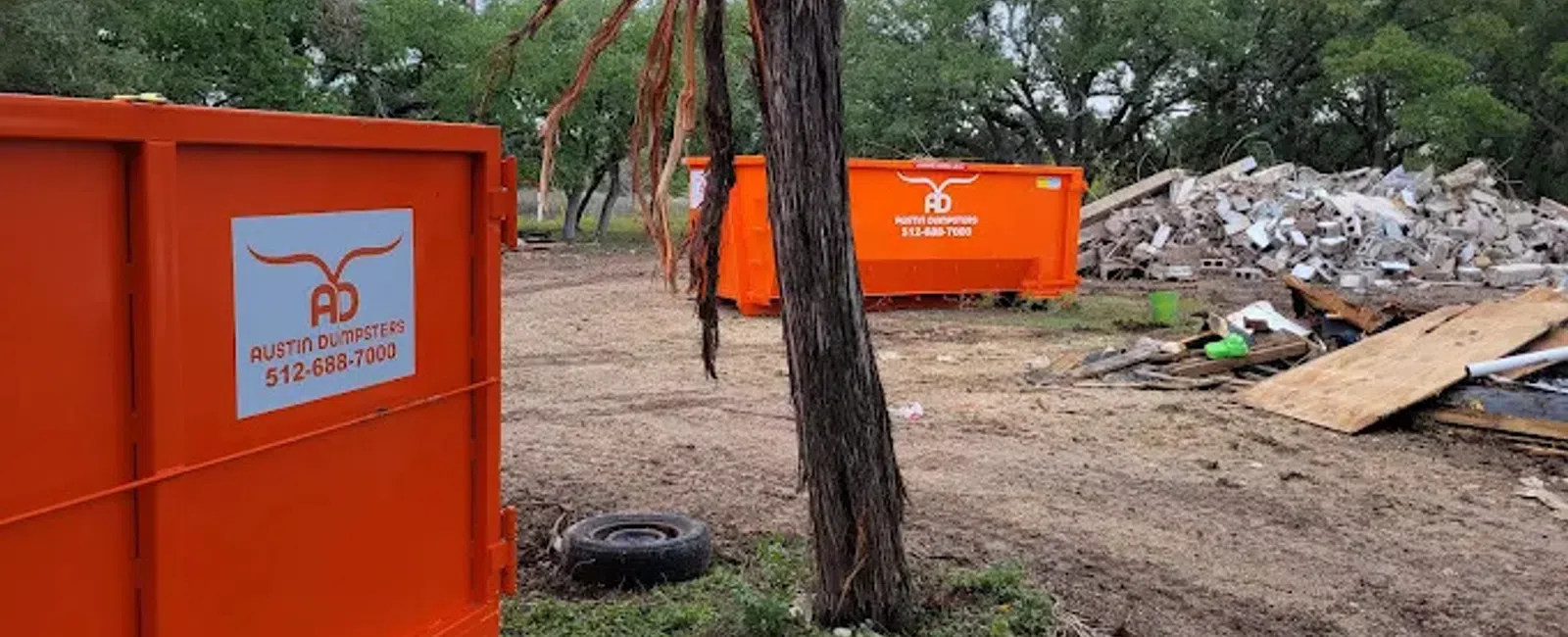
Concrete, brick, stone, and dirt are the only materials where the container you need has almost nothing to do with how much space the pile takes up. A patio tear-out that looks like it would fit in the bed of a pickup can run five tons.
That gap between how big a load looks and what it actually weighs is where most people get caught out, so it is worth working through the numbers before you rent anything or swing the first hammer.
Here is how heavy debris disposal works, how to estimate your load, and what to expect in terms of weight.
Why heavy debris gets handled differently
A cubic yard of household junk, think broken furniture, boxes, old carpet, runs somewhere around 150 to 300 pounds. A cubic yard of broken concrete runs closer to 2,000 to 3,000 pounds. Same volume, ten times the weight.
Every roll-off container has two limits: how much it holds and how much the truck can legally carry down the road. With general junk, you almost always hit the volume limit first, so container size is what matters. With concrete and dirt, you hit the weight limit long before the container looks full, so tonnage becomes the number that drives everything.
This is why heavy and mixed material loads are quoted differently, and why a container that is only a third full can still be at capacity. If you are pricing out a job that involves any real amount of masonry or soil, start with weight and work backward.
What counts as heavy debris
The materials that behave this way on a scale:
- Concrete, whether slab, footing or block
- Brick, stone, pavers and mortar
- Asphalt
- Dirt, soil, sand and gravel
- Tile and porcelain
- Plaster and stucco
Roofing shingles sit just below this group. They are heavier than people expect, but they do not compare to masonry.
Everything else from a remodel, drywall, framing lumber, cabinets, flooring, is normal debris and gets estimated on volume the usual way. The problem shows up when the two get mixed. A container of general remodel debris with a few hundred pounds of broken tile thrown in is still a volume job. A container of general debris with a slab broken up into it is a weight job, and the price changes accordingly.
How to figure out what your load weighs
For flatwork like a patio, walkway, or slab, there is a rule that gets you close enough to plan with. A four-inch concrete slab weighs roughly 50 pounds per square foot. Six inches runs about 75 pounds per square foot.
Measure the area, multiply, divide by 2,000 for tons:
- A 10 by 10 patio at four inches: 100 square feet, about 5,000 pounds, or 2.5 tons
- A 10 by 20 patio at four inches: 200 square feet, about 10,000 pounds, or 5 tons
- A two-car driveway at 600 square feet and four inches: about 30,000 pounds, or 15 tons
That last one surprises people. A driveway is not a one-container job.
Worth knowing: breaking concrete up does not make it lighter. It takes up more room once it is broken because of the gaps between pieces, but the weight on the scale is identical. Volume goes up, tonnage stays put.
- For dirt, figure roughly one to one and a half tons per cubic yard. Soil that has been rained on weighs noticeably more than dry soil, so if you are digging after a wet stretch, estimate high.
- For brick, a standard brick runs about four and a half pounds. Counting them is tedious, but it is more accurate than guessing.
Picking a container for dense material
The instinct is to order big. With heavy debris, the opposite is usually right.
Our containers and what each includes:
| Size | Price | Weight included |
|---|---|---|
| 10 yard | $369 | 1.5 tons |
| 20 yard | $469 | 2 tons |
| 30 yard | $559 | 3 tons |
| 40 yard | $659 | 4 tons |
All prices are plus tax and include a 7-day rental. The only add-on is $75 per ton if you go over the included weight, and we will tell you before you book.
Run that against the patio math above and the picture gets clear fast. A 10 by 10 patio at 2.5 tons will exceed the included weight on a 10-yard container, and it will occupy maybe a third of the space. Ordering a 30-yard for it does not solve anything, because you are paying for volume you will never use while still going over on tonnage.
For most masonry jobs, the 10-yard is the right container. It sits lower to the ground, which makes loading broken concrete far less miserable, and the volume you are not using was never going to help you. What matters is having an accurate tonnage estimate going in so the overage is a number you already knew about rather than a surprise on the invoice.
Call us at (512) 688-7000 with your square footage and slab thickness before you order. We would rather talk through the weight with you than have you find out afterward, or you can schedule a delivery online once you know the number you are working with.
Which service you book depends on the job. A patio, walkway, or backyard slab coming out of a single property falls under residential dumpster rental. Demolition work, multiple pulls, or anything running on a jobsite schedule is handled through commercial dumpster rental, where we can stage containers around your sequencing instead of one drop and one pickup. If you want to see how sizes compare across job types first, our dumpster size guide lays it out.
Loading it properly
Two things matter when the material is dense:
Load low and level. Heavy debris goes in flat across the floor of the container, not mounded toward the middle. A load that sits above the rail cannot be legally transported, and with masonry you will hit the weight limit well before you ever get near the top anyway.
Keep clean concrete clean. Concrete with no rebar, no dirt, and no trash mixed in can go to a crushing facility and get reused as base material rather than going to a landfill. Once you throw a bag of household trash on top of it, that option is gone. If your load is clean, say so when you book, and we will route it accordingly.
What the city will not pick up
Austin Resource Recovery's curbside collection covers bulk items, brush, household hazardous waste, and textiles for residential customers. Construction and demolition debris is not included, and that covers concrete, brick, tile, dirt, and the rest of this list.
The city operates a Recycle and Reuse Drop-Off Center that takes some materials from residents, though quantities are limited and appointments are involved. For anything past a few buckets, hauling it yourself in a half-ton pickup is not realistic either. A truck bed rated for 1,500 pounds is full at roughly 30 square feet of four-inch slab.
Check the current rules at austintexas.gov before you count on any city service. Program details change.
Get a real number before you start
Heavy debris is the one job where a five-minute conversation before you order saves real money. Give us your square footage and thickness, and we will tell you the tonnage, the right container, and what it will cost (including overage) before anything is delivered.
Schedule your delivery or call (512) 688-7000.